Provenance
Keep material claims beside their source context and collection date.
Why this workflow exists
Prospecting becomes safer when missing fields remain missing, events remain dated context, and every downstream action has a visible reviewer.

Operating principle
The workflow is designed around a practical failure: a plausible-looking company or title can move through enrichment and outreach faster than anyone checks its identity. The remedy is not another confidence adjective. It is a traceable path from brief to source, transformation, exception, and decision.
That path supports correction. An operator can see why a record entered the list, which field remains uncertain, what source supplied a date, and who approved the use. When evidence is insufficient, the correct output is an unresolved state—not an invented answer.
“A missing field is not permission to invent one. An event is not intent. A company match is not yet a reason to contact a person.”
Keep material claims beside their source context and collection date.
Record transformations so a changed CRM field can be explained and corrected.
Do not convert public events into intent or role assumptions without review.
Name the person who approves relevance, suppression, and outreach.
Shared operating language
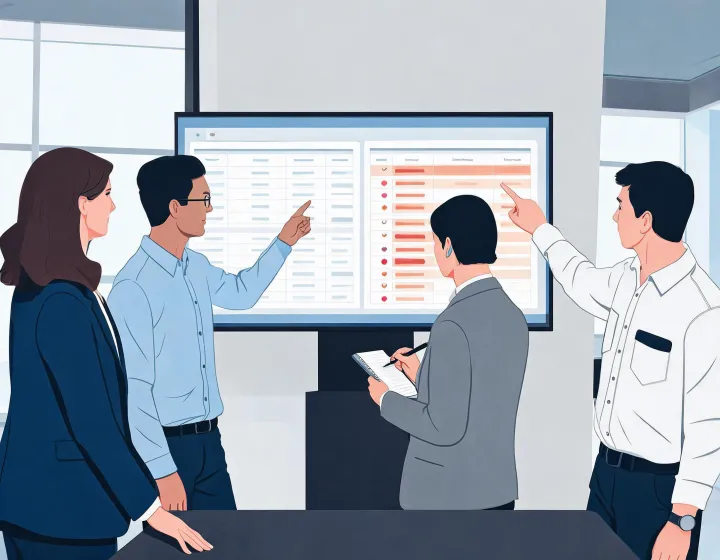
Revenue leadership defines the thesis. RevOps owns field lineage and correction. SDR managers review relevance and outreach boundaries. GTM engineers inspect permissions, retries, logs, and deletion. A common evidence log lets each team challenge the same record without hiding uncertainty behind a score.
This division also exposes trade-offs. Waterfall enrichment may resolve more fields while creating additional conflicts and deletion work. Browser automation may reveal context while increasing permission and fragility risk. A smaller reviewed cohort can be more useful than a larger list whose provenance cannot be reconstructed.
Include a clear match, an exclusion, an ambiguous identity, and a stale event. Then inspect how the workflow handles each state.
npx -y @okki-global/okki-go-taroball